
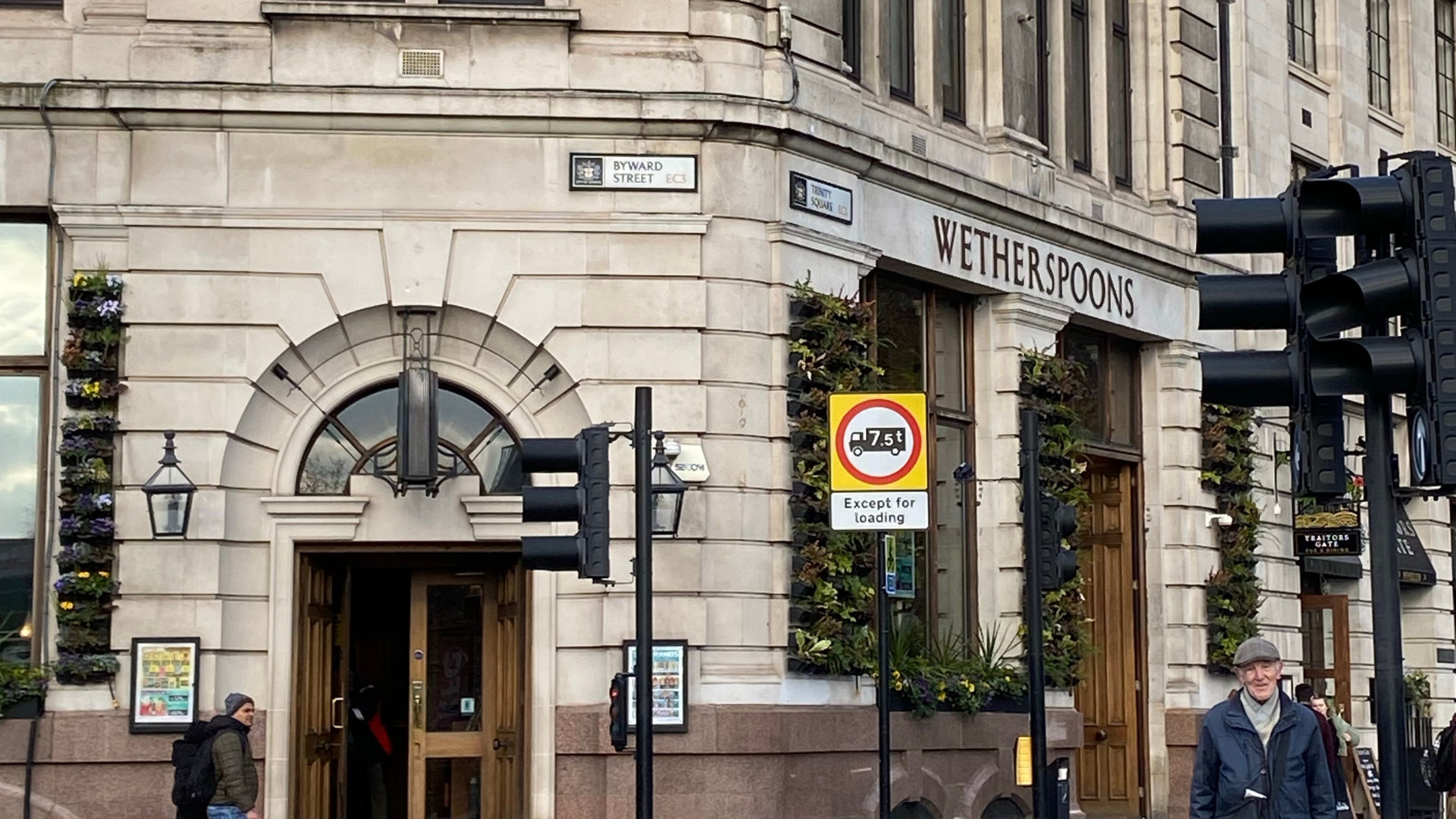
The recent Court of Appeal decision in Burger v Wetherspoons raises an important question for personal injury law: should businesses be able to avoid liability where an injured claimant is left without any meaningful route to compensation because an independent contractor has no valid insurance?
The answer reached by the Court may reflect established legal principles, but it also highlights a gap in modern law that arguably deserves reconsideration.
The facts behind Burger v Wetherspoons
In August 2018, Mr Burger was restrained by two door supervisors outside a Wetherspoons public house in Guildford. Five years later, following trial, the Judge found that the restraint amounted to a serious assault, describing the doormen’s conduct as “appalling.”
Mr Burger suffered significant injuries, and damages were assessed at just over £71,000. Yet, nearly eight years after the incident, Mr Burger ultimately recovered nothing.
Why was compensation not recoverable?
The Court of Appeal upheld an earlier High Court decision that Wetherspoons could not be held vicariously liable because the door supervisors were employed not by Wetherspoons but by an independent contractor, Risk Solutions Ltd.
Although Mr Burger obtained judgment against Risk Solutions Ltd, the company had been dissolved and had no valid insurance covering the incident. The judgment was therefore effectively worthless.
The practical consequence was stark:
- liability for the assault had been established;
- damages had been assessed;
- but there was no realistic means of enforcing the judgment.
A legal framework rooted in the 19th Century?
This outcome reflects two longstanding legal principles that emerged during the Industrial Revolution:
- the restrictive approach to vicarious liability for independent contractors; and
- the doctrine of limited corporate liability.
Both principles developed during a period when extending liability too widely was thought capable of inhibiting commercial growth.
Today’s economy is very different.
Modern businesses routinely transfer operational risks to specialist contractors, while insurance has become an ordinary feature of commercial life. Wetherspoons undoubtedly gained an economic advantage by outsourcing door supervision to an independent contractor.
It is difficult to suggest that requiring large organisations to employ their own security staff, or to ensure that contractors maintain effective insurance, would threaten commercial viability.
A judgment reached “with regret”
Lord Justice Bean delivered a short concurring judgment stating that he agreed the appeal should fail “with regret.” His Lordship considered himself bound by the established law governing vicarious liability for independent contractors.
Those comments perhaps reflect a wider recognition that, although legally correct, the outcome appears fundamentally unsatisfactory.
Looking beyond vicarious liability
The law of vicarious liability has developed considerably over recent decades.
Rather than further complicating that doctrine, it may be preferable to ask whether the law should instead recognise a practical duty better suited to modern commercial realities.
One possible answer already exists within earlier case law.
Gwilliam v West Hertfordshire Hospital NHS Trust
A useful comparison can be found in Gwilliam v West Hertfordshire Hospital NHS Trust (2002).
The claimant suffered injury whilst using a “splat wall” attraction at a hospital fundraising event. The attraction was operated by an independent contractor. Before the event, the Trust’s organiser asked whether appropriate insurance was in place. The contractor confirmed that it was. Unfortunately, the insurance later lapsed before the event through oversight.
Although liability against the contractor was established, the contractor had limited financial resources. The claimant therefore argued that the NHS Trust itself had failed to exercise reasonable care when selecting the contractor, specifically by failing to ensure that adequate public liability insurance existed or warning participants if it did not.
What did the Court decide?
Two members of the Court of Appeal accepted that such a duty could exist.
Lord Woolf
Lord Woolf viewed insurance as an aspect of selecting a competent contractor. A contractor without appropriate insurance might reasonably be regarded as less than competent.
Lord Justice Waller
Lord Justice Waller went further, observing:
“…it would be fair, just and reasonable to impose a duty on the hospital to choose an independent contractor who can properly meet any potential liability which may occur.”
However, both judges concluded that there had been no breach because the Trust had reasonably relied upon the contractor’s assurance that insurance existed.
Neither considered that the Trust should have been required to inspect insurance certificates personally.
Lord Justice Sedley’s Different View
Lord Justice Sedley agreed that the appeal should be dismissed but for different reasons.
Interestingly, he indicated that, had such a duty existed, he would have found it breached. He did not consider it onerous to require production of insurance documentation.
His objection instead was broader. He was concerned that recognising such a duty would create an unacceptable expansion of negligence liability beyond established legal principles.
Why Gwilliam matters after Burger v Wetherspoons
The factual similarities become particularly striking.
Wetherspoons relied heavily upon the contractual terms agreed with Risk Solutions Ltd to establish that the company was an independent contractor.
Those same contractual terms required Risk Solutions Ltd to:
- maintain employers’ liability insurance;
- maintain public liability insurance;
- provide annual evidence of that insurance; and
- indemnify Wetherspoons against claims arising from personal injury.
The clear commercial intention was that insurers, not Wetherspoons, would ultimately meet claims such as Mr Burger’s. Yet Risk Solutions Ltd apparently had no valid insurance.
This aspect of the litigation received relatively little attention during trial or appeal, and there is little evidence explaining why insurance had lapsed or become ineffective.
On the face of the judgment, it appears that Wetherspoons simply failed to enforce the contractual insurance requirements that it had itself imposed.
A Paradox in the Law
This creates an unattractive paradox.
Wetherspoons successfully relied upon its contractual arrangements to establish that Risk Solutions Ltd was an independent contractor.
However, Mr Burger was critically disadvantaged because Wetherspoons apparently failed to ensure compliance with those same contractual provisions relating to insurance.
A possible 21st Century solution
A more satisfactory approach would be to recognise a carefully defined duty requiring businesses engaging independent contractors to ensure that appropriate liability insurance is maintained.
Such a duty would closely resemble that discussed in Gwilliam.
Lord Justice Sedley’s concerns regarding uncontrolled expansion of liability were understandable in 2002. Subsequent developments in the law, particularly following Robinson v West Yorkshire Police (2018), demonstrate the courts’ increasingly careful approach to recognising duties of care.
Equally, the modern law of vicarious liability now operates through a two-stage analysis.
Mr Burger’s claim failed at the first stage because Risk Solutions Ltd was found to be a genuine independent contractor rather than in a relationship akin to employment.
It was accepted, however, that had the first stage been satisfied, the second stage, requiring a sufficient connection with Wetherspoons’ business, would also have been met.
The proposed duty would therefore apply only in a narrow category of cases where:
- the contractor is genuinely independent;
- the work is sufficiently connected with the defendant’s business to satisfy the second stage of the vicarious liability analysis; and
- the claimant is left uncompensated because appropriate insurance was not maintained.
Conclusion
Requiring businesses simply to ensure that the insurance protections they have contractually required actually remain in force would hardly be an onerous obligation.
Indeed, it would merely require organisations such as Wetherspoons to do what they had already decided was necessary to protect their own commercial interests.
The result in Burger v Wetherspoons may represent the current state of the law, but it also exposes a discrepancy between traditional legal doctrine and modern commercial reality.
Perhaps it is time for the law to move from a 19th century solution to a 21st century one.