
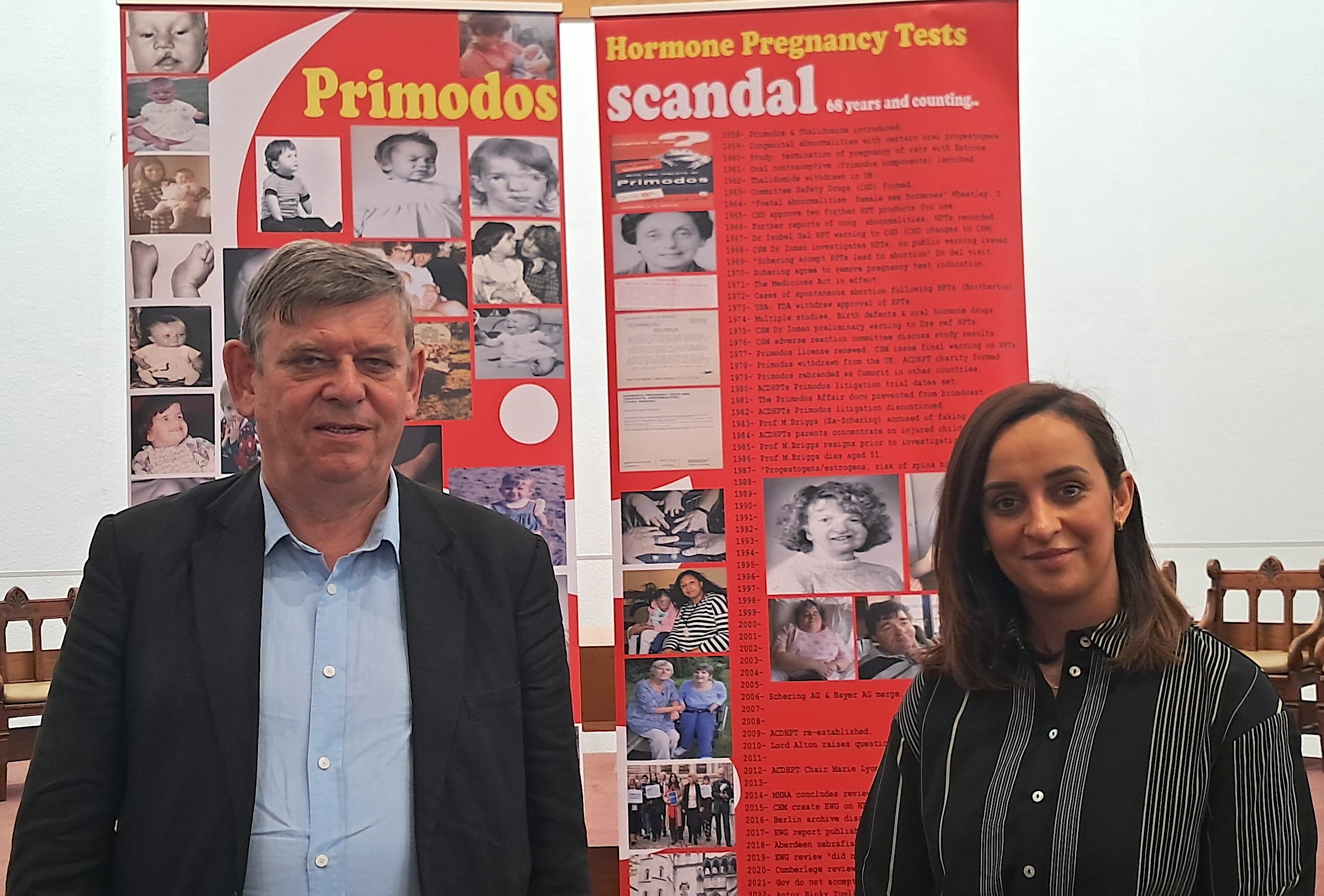
Our article in Forensic Science International
The Sally Clark case remains one of the most significant miscarriages of justice in modern English legal history. It exposed serious weaknesses in the way expert scientific evidence is presented, understood and challenged in criminal trials.
These issues form the basis of an article that I co-authored with Dr Carolina Stamboulid, recently published in Forensic Science International as part of the special issue The Science Behind Wrongful Convictions, edited by Professor Dr Henry Otgaar of Maastricht University.
Why the Sally Clark case still matters
When I was approached to submit an article to this special issue, I thought immediately of the Sally Clark case. I remembered how at the time I was mystified that Professor Sir Roy Meadow, was allowed to give evidence before a jury that Sally Clark had a one in 73,000,000 chance of experiencing two unexplained sudden infant deaths.
The article identifies the many scientific objections to Professor Meadow’s statement in detail. It also seeks to analyse the different strands which combined to create this notorious miscarriage of justice.
The problems with expert evidence at trial
Whilst Sir Roy Meadow’s professorial hubris was the most conspicuous shortcoming in the trial and appeals of Sally Clark, there were many others. We look at the process by which expert evidence is considered and admitted in English Criminal Courts. This was described by Lord Bingham as being “characteristically pragmatic“. A less kind but more accurate description was given by the Law Commission after the Sally Clark case of “laissezfaire“.
Can juries properly evaluate scientific evidence?
The jury system also comes under scrutiny. We questioned the jury’s ability to understand complex scientific evidence and the likelihood of them being swayed by graphic, if unscientific, evidence. We also draw an analogy with Camus’ novel, “The Outsider” in relation to the impact of a Defendant’s demeanour on a jury.
Has the criminal justice system improved since Sally Clark?
The article further analyses to what extent the position is now improved over 25 years later. Whilst there have been some developments, in particular in relation to Practice Directions in the Criminal Courts, the underlying problem of a lack of expertise and understanding in advocates and judges of scientific evidence remains the same. Whilst a similar reoccurrence is unlikely given the notoriety of the Sally Clark case, a miscarriage of justice arising in different circumstances through a lack of appreciation of scientific evidence is still present.
It was instructive to work with Carolina Stamboulid on this article. Carolina has a deep intellectual understanding of the relevant issues and technical grasp.
The regional revolution of scientific expertise
For someone who has been based in Liverpool for all my practising life, I am appreciative of what might be described as a quiet revolution undergoing in British regional cities. This is occurring as a result of the expansion of higher education. Many graduates prefer to stay in the city where they have studied, creating a pool of skilled employees, providing new impetus. With the exception of Simon Jenkins in The Guardian, the mainstream media in London has not picked up on this development. It appears sticking to its diet of reporting flashpoints, spin and social media gossip.
Working with Dr Carolina Stamboulid
Carolina is an example of this encouraging trend. She came from Brazil to study at the Liverpool John Moores University, obtaining a first-class degree in Biomedical sciences. She then undertook a PhD at Manchester in Biomedics and human genetics. Carolina is the founder of Episteme Scientific Consulting based in Liverpool. This project is based on a family experience which made Carolina realise that there is issue with how scientific evidence is applied in Court. She is clearly right in this perception, as the article on Sally Clark illustrates.
Conclusion
The Sally Clark case continues to demonstrate the consequences of misunderstanding scientific evidence within the criminal justice system. Although procedural safeguards have developed over the past 25 years, significant challenges remain in ensuring that judges, advocates and juries are equipped to evaluate complex expert evidence. Our hope is that this article contributes to the continuing discussion about improving the reliability of criminal trials involving scientific and medical expertise.